Menstrual Cycles Matter · Issue 3
Maybe it's time we started honouring our cycles
What to do when you know the pattern of your menstrual cycle.
Megan · 30 August 2026
In the last two emails I’ve asked you to do one thing: track your cycle. Not just when you bleed, but your energy, how you feel and anything physical that comes up, ideally over three cycles so you can start to see what repeats.
So now, assuming you’ve done that, what do you actually do with it?
Before I get into that, I want to remind you that menstruation hasn’t always just been treated as the inconvenient few days every month that women are expected to get on with. Across different cultures and points in history, there are examples of menstruation being treated as a time of spiritual power, renewal and reflection, with women resting, gathering together or stepping back from normal responsibilities.
There is also plenty of history of stigma and restriction, so I don’t want to romanticise it (I think this deserves a whole email of its own), but what I find interesting is that there were cultures that made space for it.
We have moved pretty far away from that. The expectation now is generally that you wake up, work, exercise, socialise, reply to everyone, be productive and operate pretty much exactly as you did yesterday, regardless of what is going on in your body.
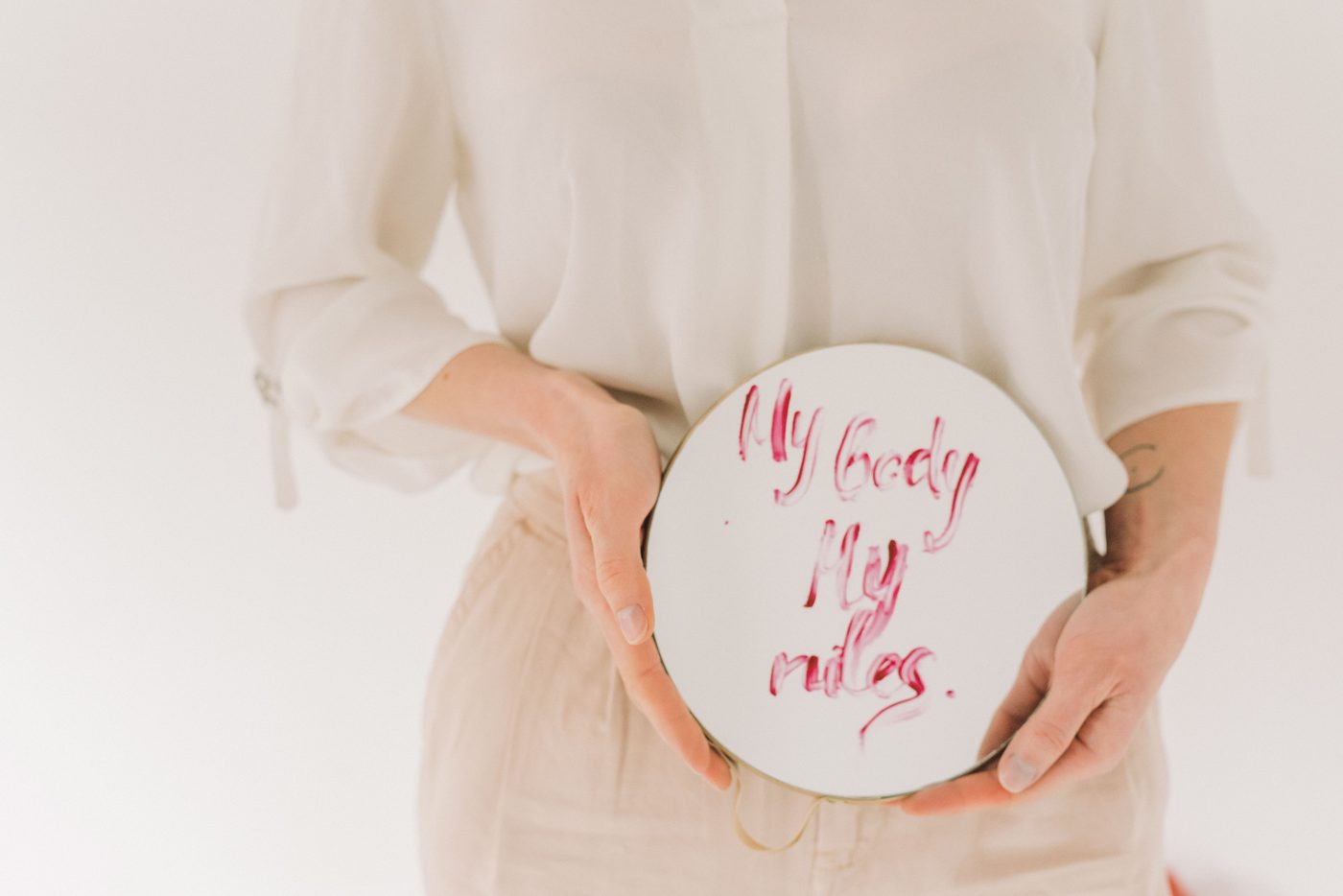
I think there is something to be said for bringing a bit of that honouring back, not just when we bleed, but across the whole cycle. Not by letting your cycle run your life, but by recognising it is happening and using what you know about yourself to make life work a little better.
Use your pattern
After around three cycles of tracking, you should hopefully have some sense of your own patterns. And I really mean your own - this isn’t about somebody on Instagram telling you how you should feel on day 14 or that everyone suddenly becomes wildly confident around ovulation.
For me, there are parts of my cycle where I naturally have more energy and want to lean into things, and others where I know I need to give myself a bit more space. A few things I’ve changed:
- I manage my diary around my cycle as much as I can (hence why I built Nadi). During my late luteal phase and my period, I try to have fewer meetings.
- I use my higher-energy days. If I’m meeting someone for the first time and want to bring a lot of energy, I’ll often arrange it around ovulation because that tends to be a particularly energetic and social time in my cycle.
- I rest more on my period. I go to bed earlier or sleep longer, and I’m less likely to force myself to do something just because I think I should.
- I communicate it more. I’m much more aware of the difference between my energy and my partner’s. I swear men could wake up and decide to go hiking every day without giving it a second thought (!). There are points in my month where I’d happily join in and others where the suggestion of a mountain feels personally offensive - and I tell him that.
- I give myself less of a hard time. And in a world that feels like it is moving at 1,000 miles an hour, I’ve found that strangely grounding. Social media, work, messages, news, people constantly showing you what they are achieving - there is so much coming at us all the time. Having this almost secret knowledge of my own body gives me somewhere internal to come back to and say: okay, this is where I’m at today, so what am I actually going to do for myself?
These examples of what works for me, not hard and fast rules - which is why I keep going on about tracking your own cycle rather than following somebody else’s template.
To reiterate - we are not biologically designed to feel exactly the same every day. Our bodies change throughout the cycle, but I think we are very quick to interpret changing energy or needs as inconsistency or weakness - they are not.
And now for my completely unproven personal hypothesis: sometimes I wonder whether constantly moving through these different versions of ourselves is part of what makes women so bloomin resilient, empathetic and multifaceted.
Maybe there is something powerful in knowing all of those versions of yourself rather than expecting yourself to be one consistent person every day. The high-energy you, the social you, the I-really-do-not-want-to-go-hiking you. They are all you.
Perhaps that is what honouring your cycle looks like now: knowing it, recognising it, working with it where you can and giving yourself far less of a hard time when you don’t feel exactly the same every day.
I have somehow taken three emails to make this point, but I really believe it: understanding your cycle can become a kind of secret power.

Try this
Go back over the three cycles you’ve tracked and ask yourself:
When do I seem to have more to give?
When do I seem to need more from myself?
Then choose one thing to change based on what you notice.
Maybe you protect an evening. Maybe you protect five minutes. Maybe you move a meeting, plan something social for the week you usually feel most energetic, or simply tell your partner what you’ve noticed.
It doesn’t need to be a complete life overhaul. The point is to stop treating your cycle as something that only exists when you bleed and start recognising it as something your body is moving through all month.
I would love for us all, in our own way, to bring back even a small sense of honouring that, and using our own unique secret power.
Megan
This article first appeared in Menstrual Cycles Matter, our newsletter. Read the original on Substack. Subscribe to get the next issue: