Menstrual Cycles Matter · Issue 1
Why I care about your menstrual cycle
The first issue of Menstrual Cycles Matter, and the Boxing Day that started all of this.
Megan · 12 July 2026
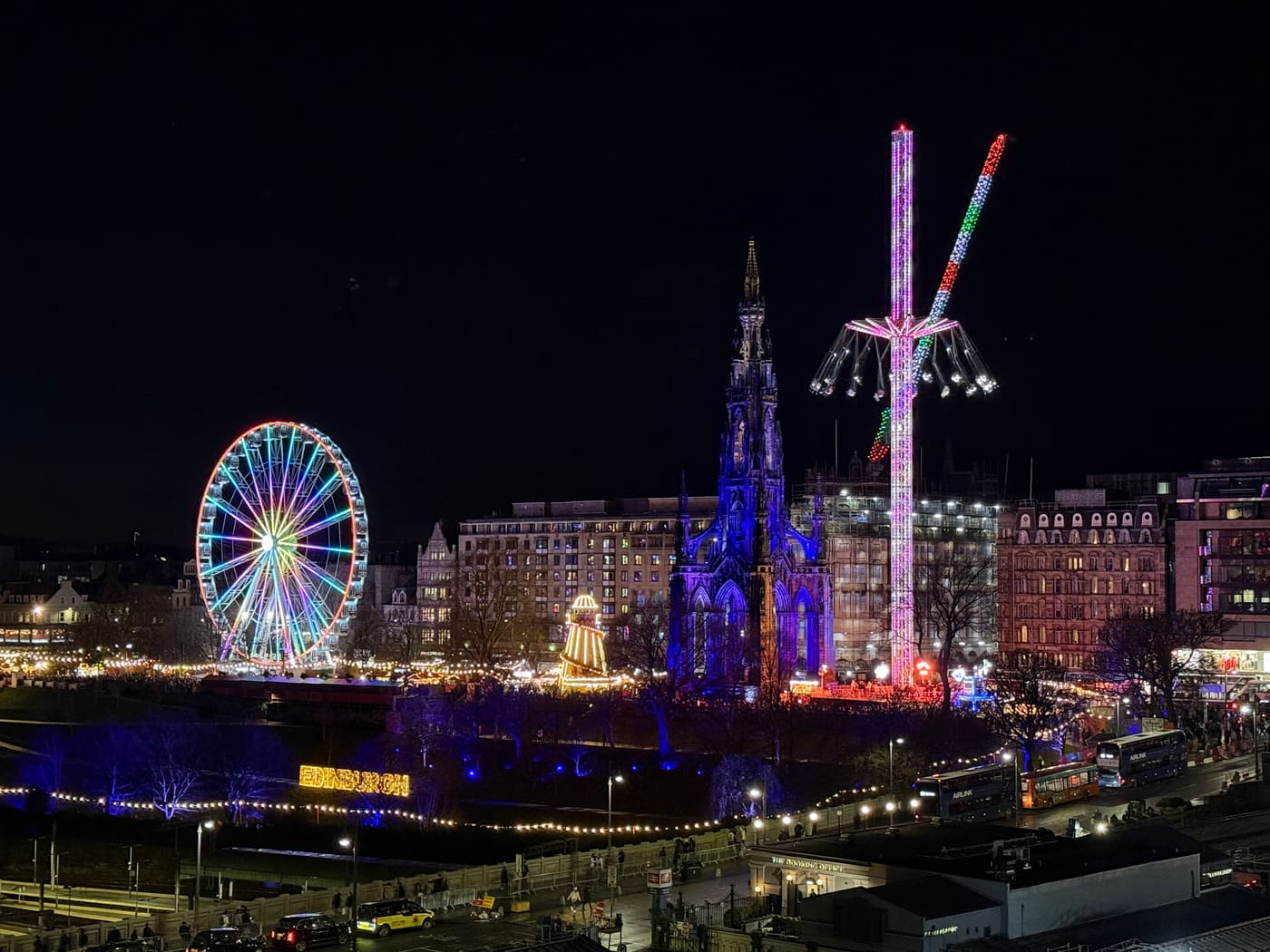
It was Boxing Day. That festive lull that hangs in the air between Christmas and New Year, mixed with the excitement of finding a bargain. I was walking down George Street in Edinburgh and then, suddenly, as always happened around this time in my cycle, the pain hit.
The crippling, cramping kind. So intense that my body pretty much goes into shutdown and does two things - presses the eject button, and sends all of its focus to the pain, which means I lose the feeling in my hands. On this occasion it was full eject, very quickly, and I ended up at the side of the street vomiting.
I have so many versions of this story. Outside Ikea. At airports. In restaurants. This was just my reality, and when I went to the doctor about it as a teenager there was a simple fix on offer - go on the pill.
So I did. I went on the combined hormonal pill (tried a few - Rigevidon and Levest among them). And it helped - I was often in less pain, and I chose not to bleed at all, taking packs back to back.
Before I go any further I want to be really clear: I am not here to take a pro or anti position on hormonal contraception, or any medical intervention. Everyone has to find the path that works for them, ideally with a good doctor alongside. I was on the pill for over ten years, right up to my late twenties, and it helped me get on with life, “carry on as normal”, and build a pretty successful career in finance.
But then two things happened at more or less the same time, and together they changed everything.
The first was work. I started working on financial inclusion, specifically the gender pension and savings gap - the fact that women retire with around 40% less in their pensions than men. Dig into why, and women’s health keeps showing up. Time off work for chronic menstrual symptoms can mean less pay, which means less saved, which compounds for decades. I was researching money and kept finding periods.
The second was personal. I took some time out to travel, and while I was at it I visited a naturopath about a skin condition I could not shake (I am telling you, no steroid cream was touching this thing!). Naturopathy looks for the root cause rather than just treating the symptom - which, honestly, was a revelation to me. It had never properly landed that so much of the healthcare I’d received was designed to manage symptoms, not ask why they were happening. That sent me back to basics on everything I was struggling with. And top of the list, obviously, was the crippling pain every month.
In order to understand my ‘baseline’ level of pain and how my body runs ‘normally’, I decided to try coming off the pill. A lot of reading, some supplementation, and a whole lot of learning and un-learning later (I will share more on this in future emails), here is the single biggest thing I found out:
Women are cyclical.
That might not sound profound. Maybe to you it is obvious. It was not obvious to me, because nobody had ever taught me it. What I had been taught was: you bleed once a month, deal with it at best, hide it and grin and bear it at worst.
We all accept the 24-hour cycle as a given, energy rises and falls across the day, and we have built the entire working world around it - the 9 to 5 exists because of it. But women have a second cycle, roughly monthly, that shapes energy, focus and mood just as much. And almost nobody is thinking about it, planning around it, or designing for it. My hunch is that many women only really meet their cycle when they try to get pregnant and suddenly need to track it, but your cycle is so much more than just the thing that gets you pregnant.
What I didn’t know
A few things I didn’t know until embarrassingly recently:
- On the combined pill, the monthly bleed is a withdrawal bleed rather than a true period.
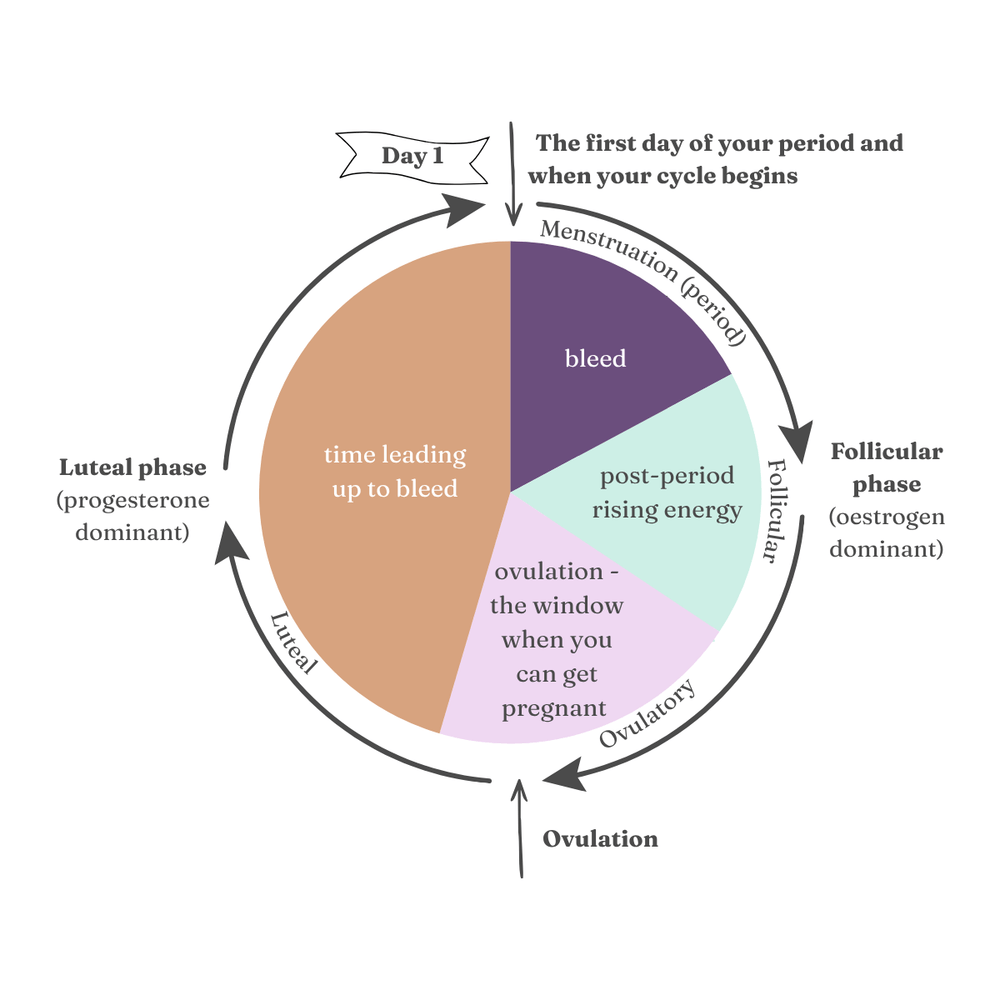
- A 28-day cycle is an average, somewhere around 21 to 35 days is common, and your own can vary from cycle to cycle.
- Technically the cycle has two phases - follicular and luteal - but most of us experience it as four distinct chapters: (1) the bleed, (2) post-period rising energy, (3) ovulation - the window when you can get pregnant, and (4) the time leading up to our next bleed. (see below)
- Some medical bodies now recommend treating the menstrual cycle as a vital sign - the same category as heart rate and blood pressure - that is how much it can tell you.
Why it matters
And here’s the thing about not knowing any of this: I had no way to make sense of how I felt, and no tools to do anything about it. So I did what a lot of us do - kept pushing on. Through the pain, through the pre-period highs and lows, with a hot water bottle strapped to my stomach on Zoom calls.
Knowing where I am in my cycle has not fixed a world that runs like a nervous system overload machine. But it gave me the thing I’d been missing: a way to understand myself, and to start listening to what I actually needed. These days I treat my cycle as a tool in its own right - I have gained so much respect for it, and I use it to shape how I plan my weeks and my life.
I’ll be honest - I’m still not fully pain free. I’m in less pain, and I’ve had the occasional pain-free month. So I’m not here selling a cure. I’m here to share what I’ve learned, honestly, as I keep learning it.
Try this
If you take one practical thing from this email, make it this. For one cycle - just one - jot down three things a day (ideally at roughly the same time every day):
- what day of your cycle you’re on (day 1 is the first day of your bleed that you need to use a sanitary product)
- your energy out of five - 1 being low, 5 being high
- one word to represent your day and how it has felt (e.g. fabulous, overwhelming)
Thirty seconds, in your notes app or scribbled on a piece of paper. By the end of the month you’ll have something most of us were never given: your own pattern, in your own words. It’s the difference between “I’m all over the place” and “ah, it’s day 24 - this is what day 24 feels like”.
Because that, really, is why I care about your menstrual cycle. Mine explained me to myself, and yours can do the same for you.
That’s also why this newsletter exists, and why it’s called Menstrual Cycles Matter. Roughly every couple of weeks I’ll send you something useful about the cycle most of us were never taught - the evidence, the practical stuff, and the occasional story from my own messy journey with it. In the next issue, I’ll show you how to make sense of what you’ve tracked.
So, for this first ever issue, I would love to hear from you: what is one thing about your cycle that nobody ever taught you?
Email me at hello@nadi.health and tell me. I read every email and I will always write back.
Megan
This article first appeared in Menstrual Cycles Matter, our newsletter. Subscribe to get the next issue: